

The Missing Layer: Chaldean Numerology (The Name System)
What it reads, what it doesn’t, and why that difference matters

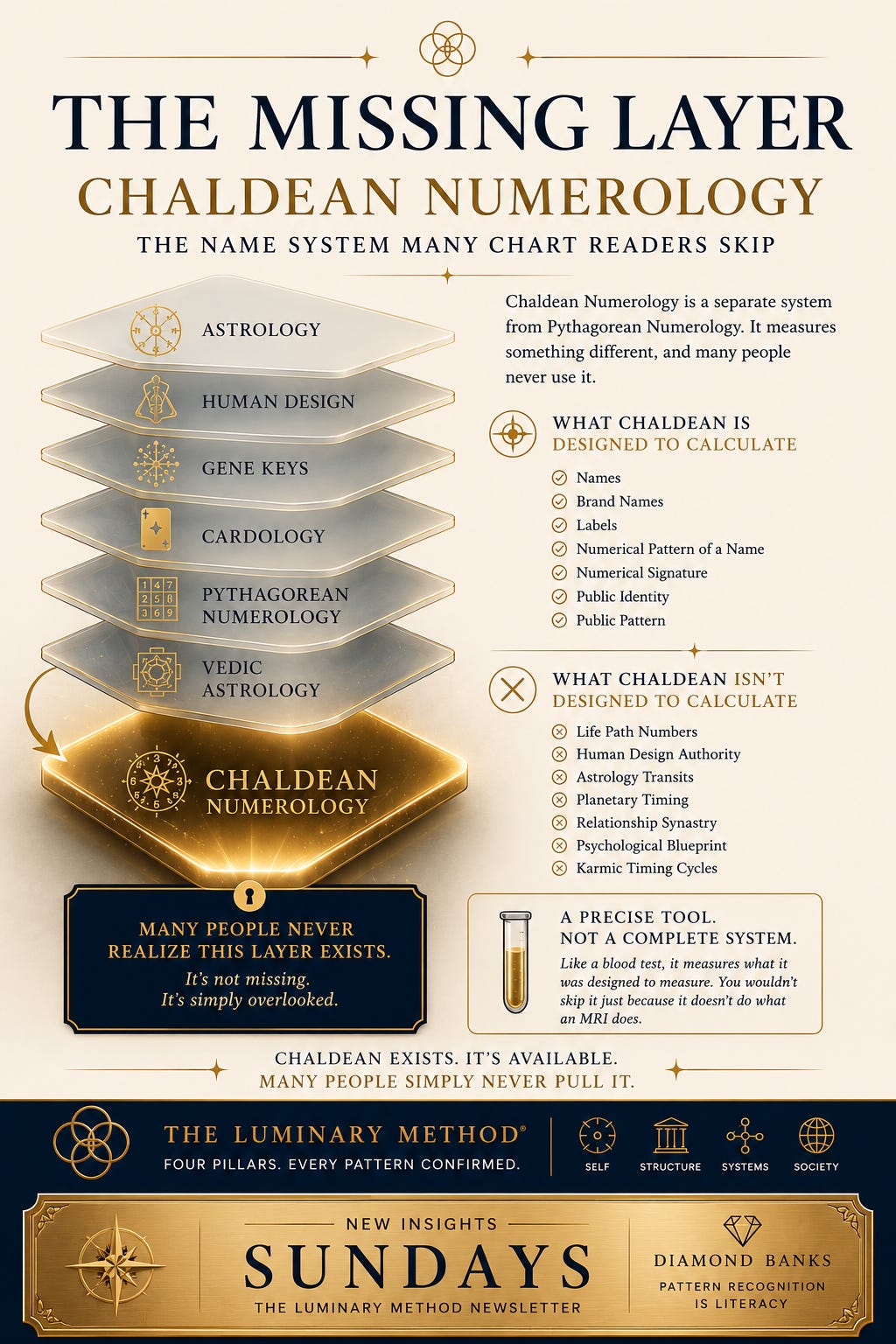
Two major numerology systems exist, and you have probably only worked with one of them. Pythagorean numerology is the version you likely encountered first (Life Path numbers, destiny calculations, and the system that assigns values 1 through 9 to letters in a fixed sequence). It receives the most teaching and also draws the most misunderstanding, partly because people treat it as the complete approach rather than one system among several.
Chaldean numerology is the second system; it is older, appears far less often, and measures something different entirely. That difference is what makes it the layer many chart readers never add.
What Chaldean Actually Measures
Chaldean numerology assigns values to letters based on sound rather than alphabetical order and excludes the number 9 from its base calculations. The result it produces for any name differs from the Pythagorean result for the same name; that difference is the central point.
Pythagorean numerology examines the structure of a person’s path (life trajectory, soul pattern, destiny number). Chaldean examines the name itself (the tone it carries and the numerical pattern a word or label projects in public). This focus makes Chaldean useful for a specific area that Pythagorean was never built to address.
The Pattern I Started Noticing in Brand Names
When you run brand names through Chaldean calculation and compare results between companies that built lasting public presence and those that collapsed or rebranded, a pattern appears.
Rolex calculates to 22 in Chaldean, a number practitioners associate with structural authority and long-term visibility. Microsoft and Walmart produce numbers linked to commercial alignment and mass reach; these names have supported their public functions from the beginning.
Nokia calculates to 16, and Satyam calculates to 14. Chaldean literature connects both numbers with sudden loss, instability, and collapse, and both companies experienced exactly that. Nokia lost its dominant market position, and Satyam became one of the largest corporate fraud cases in Indian history.
This is not a claim that the name caused the outcome; pattern recognition works through consistent alignment across cases, not singular proof. When you place the Chaldean calculation next to the public history of a brand, a pattern surfaces, and surfacing that pattern is what Chaldean is built to do.
What Chaldean Cannot Do
A blood test analyzes specific markers in your blood. It will not show you what an MRI reveals, replace the insights of an EKG, or catch what an X-ray would; that does not make the blood test incomplete, it makes it precise. Chaldean numerology works the same way within The Luminary Method.
It reads the numerical patterns in your names and labels. It does not map your full life story, calculate timing or transits, or deliver the psychological depth that other systems provide. It cannot tell you your Human Design authority, what your Tropical chart says about relationships, or what your Pythagorean Life Path indicates about long-term direction.
Running Chaldean alone and expecting a complete picture is the same as ordering one blood panel and telling your doctor you have finished all testing.
Why This Is the Missing Layer
Many people who study astrology or Human Design skip Chaldean calculations entirely, and many who explore numerology use only Pythagorean numerology and assume they have covered the full subject, when they have covered only one part.
The two systems produce different numbers because they measure different things. When the results align, that alignment adds weight to the pattern. When they differ, the difference itself is information worth examining before acting.
Cross-referencing delivers something single-system work cannot: a second independent measurement taken alongside the first, reading something the first system was never designed to catch.
The Luminary Method cross-references seven systems across four pillars to find where independent outputs confirm the same pattern. Chaldean and Pythagorean Numerology are counted separately because they measure different things. A decode built on one system is a description of you through one lens. A decode built on confirmed patterns across systems is a different conversation. If you are ready for that conversation, the booking link is below.